
 English
 Español
 Portugues
 Pусский
 Français
 Deutsch
 日本語
日本語 한국어
한국어 العربية
 Italiano
 Nederlands
 Svenska
 Polski
 Türk dili
 Indonesia
 Melayu
 dansk
dansk Magyar
 қазақ
қазақ বাংলা
বাংলা עִברִית
 čeština
 українська
 беларускі
 Filipino
 Suomalainen
 اردو
اردو հայերեն
 български
 Hrvatski
 galego
 नेपाल
नेपाल euskara
 Shqipëria
 Malagasy
 Башҡорт
 Türkmenler
 Ilocano
 Нохчийн


Silicon Controlled Switch
Silicon Controlled Switch (SCS): A Comprehensive Overview The Silicon Controlled Switch (SCS) is a four-layer, three-terminal semiconductor device that functions as a bistable switch, capable of conducting current in both directions under specific conditions. It combines the characteristics of a thyristor and a gate-turn-off thyristor (GTO), offering unique control capabilities in power electronics applications. Structure and Operation The SCS consists of four alternating P-N-P-N layers, forming three junctions (J1, J2, J3). It has three terminals: an anode, a cathode, and two gate terminals (anode gate and cathode gate). The device operates in two stable states: ON (conducting) and OFF (blocking). - Turn-On Mechanism: The SCS can be triggered into conduction by applying a positive pulse to the cathode gate or a negative pulse to the anode gate. Once triggered, it latches in the ON state, similar to a conventional thyristor. - Turn-Off Mechanism: Unlike standard thyristors, the SCS can be turned off by applying a negative pulse to the cathode gate or a positive pulse to the anode gate. This feature makes it more versatile in switching applications. Key Characteristics 1. Bidirectional Conduction: The SCS can conduct current in both directions, depending on the gate triggering method. 2. Low Holding Current: It maintains conduction even at low currents, reducing power losses. 3. Fast Switching Speed: The SCS offers rapid turn-on and turn-off times, making it suitable for high-frequency applications. 4. High Voltage and Current Handling: It can withstand substantial voltage and current levels, ideal for power control circuits. Applications - Power Switching: Used in AC/DC power control, motor drives, and voltage regulation. - Pulse Circuits: Employed in timing and triggering circuits due to its precise switching capability. - Protection Devices: Acts as a crowbar in overvoltage protection systems. - Logic Circuits: Functions as a memory element in digital systems. Advantages and Limitations - Pros: Bidirectional control, low power dissipation, and compact design. - Cons: Requires precise gate signals, and its turn-off capability is limited compared to modern GTOs or IGBTs. In summary, the Silicon Controlled Switch is a versatile semiconductor device with unique switching properties, bridging the gap between conventional thyristors and advanced power electronics components. Its ability to be turned on and off via gate signals makes it valuable in various industrial and electronic systems.
उत्पाद
वर्गीकरण:
-
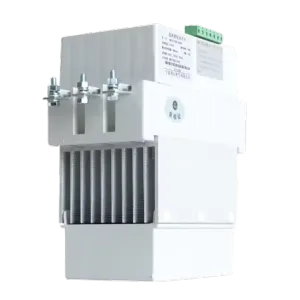
Silicon Controlled Switch
उनका वर्गीकरण: Thyristorदृश्य: 40संख्या:रिलीज का समय: 2025-12-18 14:51:41In modern power distribution and electrical systems, controlling reactive power with precision and reliability is essential for maintaining efficiency, equipment longevity, and compliance with grid codes. One of the core technologies enabling this control is the silicon controlled switch, a semiconductor device commonly implemented in thyristor‑switched capacitor banks (TSCs) and related reactive power compensation equipment. These switches play a pivotal role in dynamic power factor correction, voltage regulation, and harmonic management in three‑phase industrial networks. This article explores the background, technology, design considerations, quality factors, supply chain criteria, common challenges, application scenarios, and future directions relevant to silicon controlled switches.
समाचार
वर्गीकरण:
कोई खोज परिणाम नहीं!
मामला
वर्गीकरण:
कोई खोज परिणाम नहीं!
वीडियो
वर्गीकरण:
कोई खोज परिणाम नहीं!
डाउनलोड
वर्गीकरण:
कोई खोज परिणाम नहीं!
भरती
वर्गीकरण:
कोई खोज परिणाम नहीं!



 Whatsapp
 टेलीफ़ोन